Wednesday, June 25, 2008

Author Study-- Louise Erdrich -- Reader's Choice


For June we met at the Porpoura coffee shop to discuss our Erdrich books.

Carmyn read Tracks
Judy read A Plague of Doves
Kristine started Love Medicine and then abandoned it for The Antelope Wife
Brian read two of her children's books: The Birchbark House and The Game of Silence

Sunday, May 25, 2008

Friday, March 28, 2008

UND Writer's Conference Book -- Junot Diaz

Our featured author of the UND Writer's Conference was Junot Diaz.

Some chose to read his novel The Brief Wondrous Life of Oscar Wao and others read his short story collection Drown. We had the opportunity to meet with Diaz at The Toasted Frog.


Monday, February 25, 2008

Suite Française by Irene Nemirovsky


For February we read Suite Française by Irene Nemirovsky
We met on Sunday, February 24th at Judy's.

Sunday, January 13, 2008

The Ground Beneath Her Feet by Salman Rushdie


We read The Ground Beneath Her Feet by Salman Rushdie


and met for brunch and book talk at Kristine's place on Saturday, January 12th.

Wednesday, November 28, 2007

Author Study---Sherman Alexie--Reader's Choice


Sherman Alexie. For November we did an author study. Readers could choose a book by this author and we discussed our choices and his writing style and subject at Aaltos Garden Cafe, a new restaurant at the Canad Inns, at 6:00 pm on Tuesday Nov. 2oth.
Carmyn read Flight
Pam read Flight

Monday, October 29, 2007

Three Cups of Tea by Greg Mortenson and David Oliver Relin


For October we read: Three Cups of Tea: One Man's Mission to Promote Peace . . . One School at a Time by Greg Mortenson and David Oliver Relin
We met at Judy's for brunch on Saturday October 27th


Friday, September 28, 2007

Water for Elephants by Sara Gruen

For September we read Water for Elephants by Sara Gruen.
We met at Carmyn's place on Tuesday Sept. 18th at 6:30 pm

Wednesday, August 22, 2007

Sophie's World by Jostein Gaarder


For August we read Sophie's World
by Jostein Gaarder.


We met at Pam's on
Tuesday August 21st at 6:30 pm

Monday, July 30, 2007

Caramelo by Sandra Cisneros


For July we read Caramelo by Sandra Cisneros.

We met at Pam's on Thursday July 19th

In the true spirit of book club the food was fantastic. (See pictures below) Almost unintentionally everything was in the three colors of the Mexican flag, from the guacamole to the strawberries. The book was a little less fantastic. Only Kristine managed to finish in time for our meeting. Judy and Brian aren't planning to complete it. And Pam, Carmyn, and Larry all hope to..... eventually. (I'm still working on that!) Our responses to Caramelo were mixed, though it was evident no one LOVED the book and everyone thought it dragged. Several in the group had read House on Mango Street or "Eleven" and expected this to be similar in style or format and found that Cisneros didn't quite live up to that expectation.


The structre of this novel seemed different from her previous ones, and we focused on that for awhile commenting, too, on the placement of the footnotes and what we thought of them. I didn't mind them, but agreed that they broke up the flow of the reading since they were at the end of the chapter. One suggestion was they'd be better placed at the bottom of the page where the notation occured rather than at the end of the chapter because they slowed down the reading or caused you to have to flip back and forth or forget why it was marked.

Judy pointed out that if this book had been written with a language other than Spanish sprinkled in, the sheer volume of the foreign words would not have been tolerated. It DID had an impressive amount of untranslated Spanish in the book and we spent some time looking at examples of that and shooting words Pam's way seeking explanations.

Pam liked the middle section best... while Larry prefered the first section. I didn't really have an opinion on that. I did, however, have a bit of trouble keeping the various characters straight in my head... we were learning about a young girl, her father's and mother's stories, and her grandparent's stories as they happened in Mexico City, Acapulco, Chicago etc.


I think Cisnero's style of language is pretty poetic... but Kristine had the exact opposite perspective on that. She didn't like the way Cisneros' sentences seemed so staccato while I found tons of rich description and poetry in what she wrote. Brian felt that there was TOO much description in the story and it detracted from whatever current story she was on... you'd lose track of the thread in the midst of the description.


Another thing Kristine pointed out had to do with the title and its role in the story. Caramelo. The grandma had a caramelo scarf in the story and it is also the name of the book... Since she alone, completed the book, we asked her what happens with the scarf. She felt the idea wasn't developed... she said it was like Cisnero's editor told her to go back and mention the damn scarf every 75 pages or so to keep the continuity but it really wasn't any big thing and it held no epiphany and it was more than anything contrived and lacking what it could possibly have offered.


Still, it was a good discussion and the book was interesting. I'm just not sure it was one I would recommend. Try another Cisneros book first.

Kristine's Mexican Flag Veggies

Larry's Dos Equis Beer and Pam's Flautas

Mexican candy to add even more authenticity.

Wednesday, June 27, 2007

Saving Fish From Drowning by Amy Tan


On June 27, we drove out to Kristi's "country home" to discuss Amy Tan's book Saving Fish From Drowning. It was a cool evening and perfect for the corn chowder Kristi made for the group. She also made spinach dip and a delicious jello fruit salad. Pam brought tinto de verano--red wine and lemonade. Kristine brought bread and Brian remembered our healthy side with veggies and dip. Marci and Carmyn brought fruit and monster cookies (compliments of our friend Anna, who also joined us) for dessert. Judy topped off the evening with a still warm homemade apple pie, that was to die for.


As we sat around the high topped table we heard consensus from the group. This wasn't the best Amy Tan any of us had read. For many of us, the story lacked sympathetic characters. For others, it was the Author's Note at the beginning they found troubling. The book hinted that the story was real.. or based on some realistic research.. because of a fictional author's note at the beginning. Kristine was intrigued enough to pause her reading and try to determine if any of these people or places existed and then was saddened to learn it was all a sort of "trick of the author." I hadn't even thought about it and simply assumed that while the story had to be fiction, I trusted the author's note to be real and that the story was BASED on some events or discoveries the author made. It wasn't until our book meeting that --I-- discovered otherwise.


We were amazed at the naivety of the Karen tribe, at the obnoxiousness of the travelers--truly playing out the role of the "ugly American" for its readers. Some readers liked Heidi by the end, so I guess there was a sympathetic connection to some extent. However, I can't say I was anything but relieved to be done with the story when it finally concluded. I love Amy Tan books but this one lacked some of the charm and magic I found in her earlier novels. In her author comments she says after her mother died that she was thinking she could no longer do mother and daughter books anymore and that her mother found a new voice in this one in the ghost narrator of Bibi Chen. I guess I did like her character for the most part but it still wasn't enough for me.

Interestingly though, Judy admitted she'd not been able to finish the book before book club. This was not because she didn't have time, but because she was reading it right before her trip to Peru and couldn't continue because it just seemed like a bad idea to read about travelers being kidnapped in a foreign country right before she was embarking on a huge adventure not unlike our characters. (why invite worry, right?)

Well, now we've been to Burma/Myanmar and back..... next stop Mexico with Caramelo by Sandra Cisneros.

Tuesday, May 15, 2007

May's Catch Up Month


Catch-Up Month!
Meeting was Monday May 14
at Carmyn's Place


We each picked a book club book we'd not managed to finish during the past year and we tried to complete it for this meeting. For folks like Larry, who've completed every book, he simply needed to find a book he's been dying to read and go for it!

Here's what we've read this year:

Extremely Loud and Incredibly Close by Jonathan Safran Foer
Devil in the White City by Erik Larson
The Memory of Running by Ron McLarty
For September we each read an adolescent lit book
Wicked by Gregory Maguire
The Glass Castle by Jeannette Walls
Then we did a book swap for our January meeting
For Feb, we read Assassination Vacation by Sarah Vowell
For March, our UND Writers Conference author, Stuart Dybek's book of short stories -- Childhood and other Neighborhoods.
For April, The Memory Keeper's Daughter by Kim Edwards

The Food:
Carmyn provided colorful bean dip and tortilla chips
Pam brought brats and buns in the spirit of "Catch-up"
Marci's brought veggies to dip in a lemon dill dip.
Brian brought spinach dip and crackers.
Judy brought dessert.
Larry brought beer
Kristi brought Blue Moose spicy spinach dip and chips

The Readers:
Carmyn read The Memory Keeper's Daughter by Kim Richards but didn't finish it. Not sure I will.

Pam read Wicked by Gregory Maguire and The Other Boelyn Girl by Phillippa Gregory (a book from her OTHER book club!)

Larry read Pattern Recognition by William Gibson. This wasn't originally a book club selection. It's a darker look at the future, a sci fi book with a changed approach--almost prophetic. It features a girl with a unique talent--she's a human beta-test for products, logos. She works as a consultant.

Brian read Assassination Vacation by Sara Vowell. Brian hadn't originally come to the meeting where we read this book and so this was a perfect chance to jump in and read one we KNEW he'd enjoy. We were right. And talking about it again as a group was like reminiscing a fond memory.

Marci read ?

Kristi read Memory Keeper's Daughter by Kim Edwards--didn't like it very much-- and The Glass Castle by Jeannette Walls--loved it.

Judy read NOTHING... she was surviving the end of the school year! Almost there.


We also set the books for the next three months:
For June--
Saving Fish From Drowning by Amy Tan

For July--
Caramelo by Sandra Cisneros

For August--
Sophie's World by Jostein Gaardner

Tuesday, May 01, 2007

The Memory Keeper's Daughter by Kim Edwards


The Memory Keeper's Daughter
by Kim Edwards

We met on Tuesday April 24 at Marci's House and enjoyed some delicious Papa Murphy's pizza... pepperoni and, a book club favorite, gourmet vegetarian. We enjoyed warm cheesy herb bread, fresh veggies, wine, Amber Bock beer, and Pepperidge Farms coconut cake for dessert.
Larry, Judy, Christine, Kristi, Marci, Pam, and I were all there and the discussion was immediate. Though no one seemed to "love" the book, it seemed everyone had something to say. I was at a disadvantage having only read the first few chapters; however, I'll have a chance to read it since next month is "catch up" month.

Some of our discussion centered around our discontent with certain aspects of the novel. It was mentioned that Kim Edwards was a short story writer before and we questioned if THAT was why her work seemed to have issues with concluding and how it could almost be a short story within a larger work from time to time. We agreed that parts were moving, but I also think that one claim was "the ending sucked" and another commenter felt it was "wimpy and sad." We talked about the grief of miscarriage or that of the loss of a child or a father. We also discussed the roles of husbands and wives in that historical time period and what life would be life for someone with mental disabilities in that era as compared to today. We questioned if things could have been different for Nora and David, if he'd been truthful. For a book we didn't love we actually had a pretty good conversation.

------------------------------------------------

"But, look, the morn, in russet mantle clad,
Walks o'er the dew of yon high eastern hill."
--from Hamlet, Shakespeare

Our discussion time moved on to a more playful conversation including some Latin, a explanation of chiasmus, discussion of sonnets and what iambic meter sounds like, and some wonderfully cheesy jokes by Kristi involving a duck and his bill!

Friday, March 30, 2007

Childhood and Other Neighborhoods by Stuart Dybek


For the month of March we read a collection of short stories by Stuart Dybek and then had an opportunity to meet with him when he was at the university for the Writer's Conference.

We met as a group a week earlier, at Judy's house, to discuss his work.

I am still working on finishing the book and writing this post but I can post two of the recipes, by special request. Carmyn made the soup, using Sara D's recipe (see, Sara... you are STILL with us even though you are far away in PA) and Judy made the scrumptious dessert.


Pumpkin Crab Soup

1-24 oz. can of pumpkin
6 cups chicken stock
1 large onion, sliced
3 tbsp. olive oil
1 tsp. cumin powder
1/2 tsp. cayenne powder
1 tsp. dried basil
1/2 tsp. salt
3/4 pound crab meat (from the can is what I used)
6 oz. skim milk (or you can use cream, I did)
pepper to taste

Heat oil in a skillet and add onion. Saute for 5-8 minutes. Add cumin, cayenne, and basil. Stir for a minute. Pour in chicken stock and add pumpkin. Simmer covered for 15-20 minutes. Add crab meat and simmer the soup for 3-5 minutes. Add milk and stir. Serve!


Rum Cake

1 yellow cake mix
1/2 cup cold water
1/3 cup veg. oil
1/2 cup Capt. Morgan Spiced Rum
3 eggs

Mix and pour over 1 cup chopped pecans in tube pan.

Bake 45 minutes at 350 degrees (toothpick test).
poke holes in cake and then glaze with the following mixture:

Glaze

1/4 pound butter
1/4 cup water
1 cup granulated sugar

Combine and boil 5 minutes
then add 1/2 cup rum.

Thursday, February 22, 2007

Assassination Vacation by Sarah Vowell

February 20, 2007 Assassination Vacation by Sarah Vowell
Location: The Toasted Frog 7:00 pm

This was my first trip to The Toasted Frog, though I think I may be the last person in town to go there. I was not disappointed. I snacked on Larry's order of sweet potato fries (light and yummy!) while we waited at the bar and I ordered the fish taco which was wonderful. Back in the conference room where we met to discuss our book, I had dessert: deep fried cheesecake and all of that rich and delicious food was washed down with a Newcastle. Pam, Judy, Larry and I discussed the book though at the time of the meeting only Judy was done reading. Now, I think we've all managed to finish and I may not be accurate in saying this but I think we all enjoyed it.

Judy listened to the audiobook version and reported that the story had many voices reading various sections including Conan O'Brien, Dave Eggers, Stephen King, Jon Stewart and, of course, Vowell herself, whose distinct voice and deadpan delivery will be familiar to fans of NPR's This American Life.

Because they can sum this book up better than I can, I'll include the review from Publisher's Weekly on the Amazon site:

What do you get when a woman who's obsessed with death and U.S. history goes on vacation? This wacky, weirdly enthralling exploration of the first three presidential assassinations. Vowell (The Partly Cloudy Patriot), a contributor to NPR's This American Life and the voice of teenage superhero Violet Parr in The Incredibles, takes readers on a pilgrimage of sorts to the sites and monuments that pay homage to Lincoln, Garfield and McKinley, visiting everything from grave sites and simple plaques (like the one in Buffalo that marks the place where McKinley was shot) to places like the National Museum of Health and Medicine, where fragments of Lincoln's skull are on display. An expert tour guide, Vowell brings into sharp focus not only the figures involved in the assassinations, but the social and political circumstances that led to each-and she does so in the witty, sometimes irreverent manner that her fans have come to expect. Thus, readers learn not only about how Garfield found himself caught between the Stalwarts and the Half-Breeds, bitterly divided factions of the Republican party, but how his assassin, Charles Guiteau, a supporter of the Stalwarts and an occasional member of the Oneida Community, "was the one guy in a free love commune who could not get laid." Vowell also draws frequent connections between past events and the present, noting similarities between McKinley's preemptive war against Cuba and the Philippines and the current war in Iraq. This is history at its most morbid and most fascinating and, fortunately, one needn't share Vowell's interest in the macabre to thoroughly enjoy this unusual tour.

Pam is quick to say that the Garfield section was her favorite. The book being divided into only four chapters reads a little slower for those of us who enjoy a good chapter break now and then. The Lincoln section was interesting but it was also a little overwhelming. I had favorite bits all through the book and I was amazed at the parallels one can draw from these historical presidents and their lives to the political world of today. I also marveled at the connectedness of their world and the strange coincidences that show up again and again in the details Sarah Vowell explores.

Before I finished the last section of the book, I blogged about this book elsewhere. Feel free to check it out if you are interested in reading more of my thoughts on the book. I would highly recommend this title and I think I need to pick up one of her other books... A Partly Cloudy Patriot, perhaps.

Friday, January 05, 2007

December Book Exchange

December Book Exchange Discussion
Thursday January 4th, 2007
L
ocation: Marci's House at 6:00 pm

The Food:
Soup season continues
Judy brought a roasted pepper bean soup. We drank wines brought by Larry and Kristine. Carmyn brought sour dough and french bread from the Dakota Harvest Bakery, and Marci provided a yummy spinach dip and fresh veggies. Pam and her dessert were missed but Marci found some jam and so we had jam and bread for dessert as we sat by the fire and discussed our books from the exchange.

The Books:
One theme emerged.... few of us had time to read all the delicious books we brought home from the last meeting. Christmas vacation always seems like such a gift of days upon days off and then the reality hits and well.... only Judy completely finished her selection: The Painted Drum. Though I did finish ONE of my three options, Wit and Pam, who couldn't make it, did finish one of hers as well: The Chill.

Kristine finished two books over break: Animal Farm by George Orwell and The Island by Gary Paulsen. However she is still reading Tomcat in Love by Tim O'Brien as recommended by Larry for her Dec. book exchange book. She found that she was unable to empathize with the narrator and liked the bits with Viet Nam best. He is a bit of a scoundrel and she is hoping that the book will resolve itself by the ending (Larry assures us it will, though he points out that our "Tomcat" becomes less likeable as the story goes on). Ultimately Kristine is determined to find out if Lorna Sue (Tom's ex-wife) is, in fact, involved in an incestuous relationship with her brother... Hmmmm......

Larry is reading Patty Jane's House of Curl by Lorna Lardvick as recommended by Pam. It's Lardvick's first novel and it focuses on two sisters in Minnesota who have faced hardship and loss and bond to form a collective strength and a hair salon. In some ways it compares to Fannie Flagg's Fried Green Tomatoes in spirit and to Steel Magnolias with its fellowship of women gathered in a hair salon. Larry read part one and had to put the book down to deal with the almost predictable plot-driven tragedies... "It was almost melodramatic--it grosses me out!" were the words he used. However part two is where the salon comes in and the women begin to rebuild their lives. Larry's connection to the story can be found in his own memories of his mother's hair salon that was part of his childhood home... smelling of permanent waves and housing a Coke machine full of those curvy cold Coke bottles.

Marci read about 1/3 of The Feast of Love by Charles Baxter as recommended by Judy. So far she likes it but doesn't "love it." The thing she DID enjoy was the different perspectives on the various love stories. Feast of Love is a book about writing a book and that was somewhat annoying to Judy when she first read it, but later it all gets even more connected and that makes it better. She was glad she read it and Marci is eager to finish it as well. Marci thought she might still try to read Picture Bride by Yoshika Uchida as recommended by Judy.


Carmyn read W;t by Margaret Edson as recommended by Kristine. This play is typical in its brevity but powerful in its message. I really enjoyed it and am thinking about buying a copy for myself. I had once seen a few minutes of the film version of the play starring Emma Thompson and oddly enough the bit I'd seen ended up being one of my favorite bits. The one thing I regretted is that I didn't know as much about John Donne as I ought. I felt that this book was one that explored the ideas of life and death and illness and regret, but it also emphasized the power of literature. Now, I'm afraid I'll need to start to study Donne's poetry. I also started the The Dirty Girls Social Club by Alisa Valdez-Rodriguez as recommended by Pam but am only about 1/3 of the way through the book. I was just consumed by reading a biography of Woody Guthrie over break and that left far too little time for other reads. I still plan to at least "taste" The Know-It-All by A.J. Jacobs as recommended by Kristine.

Judy read The Painted Drum by Louise Erdrich as recommended by Larry. This book is different from the typical Erdrich in that it is initially set in New Hampshire. The story begins with some nominally Native American folk who live there and it connects to North Dakota with the drum which one of the main characters steals from an estate sale in order to return it to its home in North Dakota... a sort of spiritual quest. Since Judy LOVES Erdrich books she wasn't disappointed and though it didn't take the place of her favorite (Tracks) it was a pleasure to read Erdrich's latest.

Pam read The Chill by Ross MacDonald as recommended by Carmyn and she really appreciated the older style of mystery: the sort that gets solved not by CSI teams or forensic squads but by interviews, questioning and old fashioned putting two and two together. Her other book was The Passion of Artemisia by Susan Vreeland as recommended by Marci.


Thursday, November 30, 2006

The Glass Castle by Jeannette Walls

November 30, 2006 The Glass Castle by Jeannette Walls
Location: Carmyn's Apartment at 6:00 pm

The Food:
Soup season at book club is my favorite.
Marci brought a corn chowder that was perfect for a chilly November evening. We drank Newcastle beer brought by Larry and a bottle of red and a bottle of white compliments of Kristine. Carmyn provided artichoke dip* and a veggie tray, and Pam brought two kinds of delicious bread. Judy's banana cream pie and cookies (the cookies were a particular favorite for me: chocolate hazelnut creme de piroline) offered a sweet ending.

The Book:
This memoir, recommended by Pam, was a hit for everyone.

The Glass Castle is a no-holds barred tale of a nomadic, deprived childhood told with the hypnotic wonderment of a child who always wants to believe that Daddy will be a hero in the end and that Momma really does know best. You are enrapt reading about Walls and her siblings rifling through trash cans at school looking for food, doing the skedaddle in the middle of the night, or waiting for Dad to come home after another bender. It's a riveting story and a testament to Walls' indomitable desire to rise above a life that could have easily turned her into just another tragic headline.... Walls tells the story from the point of view of herself as a child, recalling the events as she saw them at each respective age. Scavenger hunts in the desert and late-night escapes from the family's latest town are treated as adventures.
excerpt of a review by Denise Hazlick
MSNBC


One word repeatedly rose to the surface in our book discussion: resiliency. This story is one that demonstrates how resilient the children were in the Walls family. At times the parents seemed so amazing... creative, innovative, strong, intelligent, nonconformist, unflappable. Yet, they were also horrible... alcoholic father, excitement addict mother who'd hoard chocolate bars while her kids nearly starved, an unwillingness to work, stealing from the kids' hard earned cash, deplorable living conditions. Walls story raises questions about homelessness and family life, about dependency and responsibility, about education (the homeschooled and the unschooled), and about how far the ties to family should reach. I think we'd all agree this was a good read and one worth recommending.

Read an interview with the author here.

The Book Exchange:
We drew names and then pitched our book picks .... here's how it shaped up.

Kristine will read
Tomcat in Love
by Tim O'Brien as recommended by Larry

Larry will read
Patty Jane's House of Curl
by Lorna Lardvick as recommended by Pam
Here on Earth by Alice Hoffman as recommended by Judy

Pam will read
The Passion of Artemisia
by Susan Vreeland as recommended by Marci

Marci will read
Picture Bride
by Yoshiko Uchida as recommended by Judy
The Feast of Love by Charles Baxter as recommended by Judy
A Tree Grows in Brooklyn by Betty Smith (borrowed from Carmyn, referred to in The Glass Castle)

Carmyn will read
Wit
by Margaret Edson as recommended by Kristine
The Know-It-All by A.J. Jacobs as recommended by Kristine
The Dirty Girls Social Club by Alisa Valdez-Rodriguez as recommended by Pam

Judy will read
The Painted Drum
by Louise Erdrich as recommended by Larry

*The Artichoke Dip Recipe*

Combine:

One can of drained and food processed artichokes (not the marinated kind)
One cup of sour cream
One cup of mayo (I used the Canola Mayo kind)
One cup of parmesan cheese
One 8 oz block of Philadelphia cream cheese
Two-Three swish swishes of Tabasco sauce
Two-Three swish swishes of Worcestershire sauce

It helps to grease the baking dish.
Bake at 350 degrees for one hour.

Enjoy!

Monday, October 30, 2006

Wicked by Gregory Maguire

October 30, 2006 Wicked: The Life and Times of the Wicked Witch of the West by Gregory Maguire
Location: Pam's house at 6:00 pm

Our first snow may have been what kept Larry away, or perhaps it was because I forgot to send a reminder e-mail. Oops. However, those of us who could make it warmed up to Pam's delicious cider and enjoyed a main course of Judy's carrot orange soup--perfect for Halloween. I brought veggies and Marci brought bread and we all felt very healthy until we ate Kristine's caramel brownies. Sigh. And yes, it was with brownies that Kristine made her debut at book club. We'd have extended a hearty welcome regardless. Yay.

Marci gets the award for the fastest read, though I am afraid I may have enjoyed it a wee bit more than she did. I must applaud her effort considering her long-standing distaste for the film The Wizard of Oz. I have never read any of the original books (there are 14 of them) and have only watched the film, but I suspect after looking at the Annotated Wizard of Oz that I own much of the the original stories tie into this imagined life of Elphaba, Wicked Witch of the West. I was surprised by the amount of politics, religion, and sex that comprise this fantastical tale and understand that L. Frank Baum had some things to say in the original tales as well. Now I may have to actually READ them. What I enjoyed most was the way the Maguire story wove in details from the film and I realized just how much I like the "literary allusion." Judy says, "It rewards the reader" and perhaps that is part of the pleasure. I loved how this book gave me a different view on the talking lion and on the yellow brick road or even why the ruby slippers were so important to Elphaba.

Marci and I even engaged in a post-book club discussion and tried to answer each other's unanswered questions and read together our favorite bits over the phone which goes to show that this title definitely was discussion worthy with topics like the nature of evil and hope and goodness and more. Most of our group found the book to be rather long and dense and while it was very appropriate for the Halloween holiday, it was a bit challenging for this time of year. However, I would encourage folks to finish it, if they've started.

Perhaps we should all take in the Broadway musical if we get a chance or read the sequel Son of a Witch. And perhaps we might give some time to the questions in this reading guide.

Thursday, September 21, 2006

Reader's Choice of a Young Adult Novel

Each year we designate one month to read young adult literature so we can find books to recommend to students and get a chance to see what is "out there." This month we also made our annual trek to Crookston to meet up with Larry at the country club. Pam, Judy, Marci, Larry and I met to discuss our books and share a meal on Tuesday, September 19th. Kristi was unable to make it but did share that she was reading and enjoying Night of the Twisters by Ivy Ruckman.

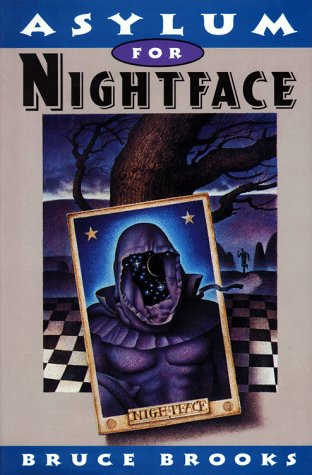
Judy read Asylum for Nightface by Bruce Brooks

"A 14-year-old boy is shocked when his hash-smoking parents return from vacation as zealous converts. "Some readers may be put off by the author's satirical depiction of born-again Christians, others will applaud his attempt to challenge fundamentalism," said Publisher's Weekly. Ages 12-up. Judy pointed out that though she wasn't quite done with the book it seemed to be heading for a grim ending.

Larry read Lyddie by Katherine Paterson

"In 1843, three years after her father abandons his failing Vermont farm, 10-year-old Lyddie and her younger brother Charles are hired out as servants, while Mama and the two youngest children go off to live with relatives. After spending a grueling year working in a tavern, Lyddie flees to Lowell, Mass., in hopes of finding a better job that will provide enough income to pay off farm debts and allow the family to be reunited. Life continues to be a struggle after she is employed in a cloth factory, but Lyddie finds refuge from wretched working conditions by burying herself in books. Learning that she cannot return home--the family farm has been sold to Quaker neighbors--the girl is seized by a burning desire to gain independence by attending college. Readers will sympathize with Lyddie's hardships and admire her determination to create a better life for herself. Paterson clearly depicts the effects of poverty during the 19th century, focusing on the plight of factory workers enslaved by their dismal jobs. Impeccably researched and expertly crafted, this book is sure to satisfy those interested in America's industrialization period." Ages 10-14. says Publisher's Weekly.

Those who'd read this book before talked about how it didn't have a romantic ending and instead showed some independence of spirit in how Lyddie is determined to have her "own life."

Carmyn read Rule of the Bone by Russell Banks
"Flunking out of school and already hooked on drugs, the 14-year-old narrator, secretly molested by his stepfather, emotionally abandoned by his weak mother, leaves his mobile home in the depressed upstate New York community of Au Sable and becomes a homeless mall rat. In a burst of bravado, he acquires a crossed bones tattoo, changes his name from Chappie to Bone, and attempts to find some focus in his dead-end existence. Convinced that he is destined for a criminal career, Bone vents his anger in acts of senseless destruction. His vulnerability and his need for love and direction are fused when he and a seven-year-old waif he has rescued from a pedophile take refuge in an abandoned schoolbus with an illegal alien from Jamaica called I-Man, whose Rastafarian wisdom and gentle demeanor are fed by liberal consumption of marijuana, which he deals. It is when Bone follows I-Man to Jamaica that the narrative falters. Though the drug-permeated Jamaican milieu is portrayed with impressive authenticity, the improbability of Bone's macabre adventures there frays the plot's credibility. The novel's strengths-Bone's cool, wisecracking voice and colloquial speech, the details of an adolescent's culture-are diluted by its excesses-too many descriptions of marijuana highs, too many coincidences. Yet one finishes the book with indelible sympathy for tough-guy Bone, touched by his loneliness, fear and desperation, and having absorbed Banks's message: that (as he said recently), society's failure to save its children is "the main unrecognized tragedy of our time." said Publisher's Weekly.

I really didn't enjoy this book and I'm not sure I would recommend it.

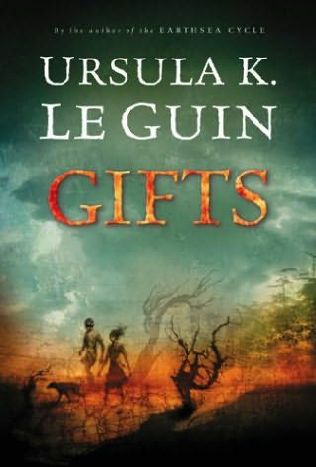
Marci read Gifts by Ursula Le Guin

"Grade 7 Up–In this well-realized fantasy, the people of the Uplands have unusual and potentially dangerous abilities that can involve the killing or maiming of others. Gry can communicate with animals, but she refuses to use her gift to call creatures to the hunt, a stance her mother doesn't understand. The males in Orrec's line have the power of unmaking–or destroying–other living things. However, because his mother is a Lowlander, there is concern that this ability will not run true to him. When his gift finally manifests itself, it seems to be uncontrollable. His father blindfolds him so that he will not mistakenly hurt someone, and everyone fears him. Meanwhile, Ogge Drum, a greedy and cruel landowner, causes heartache for Orrec and his family. There is a strong sense of foreboding throughout the novel. The characters, who are well rounded and believable, often fail to understand the extent of the responsibility that comes with great power. In the end, Gry and Orrec come to recognize the true nature of their gifts and how best to use them. Readers can enjoy this story as a suspenseful struggle between good and evil, or they can delve deeper and come away with a better understanding of the choices that all individuals must make if they are to realize their full potential. An excellent choice for discussion and contemplation."–School Library Journal

I could see Marci wasn't "in love" with this book. She tried to stretch herself by choosing a fantasy title and in the end I am not sure this was the choice. Several of us had read other books by Ursula Le Guin and enjoyed them very much. Like, Kristi, I would recommend A Wrinkle in Time above all others.
Pam read Hoot by Carl Hiassen

"With a Florida setting and pro-environment, anti-development message, Hiaasen returns to familiar turf for his first novel for young readers," wrote PW. "Several suspenseful scenes, along with dollops of humor, help make this quite a hoot indeed." Ages 10-up. Publishers Weekly

Everyone had read this one but Larry and we'd all recommend it. Larry and Judy had each read some of his books for adults as well. Sick Puppy and Skinny Dip were mentioned. Apparently he's got quite the sense of humor but those are definitely "adult" as in not aimed at a middle school audience.

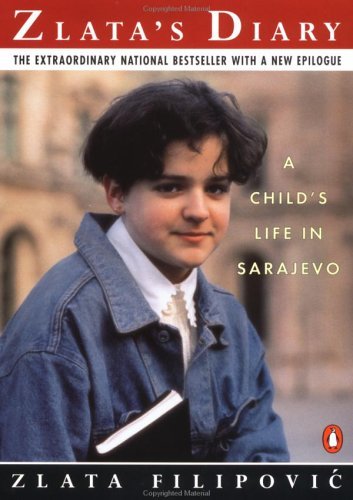
and Zlata's Diary by Zlata Filipovic

From the Publisher
"When Zlata's Diary was first published at the height of the Bosnian conflict, it became an international bestseller and was compared to The Diary of Anne Frank, both for the freshness of its voice and the grimness of the world it describes. It begins as the day-today record of the life of a typical eleven-year-old girl, preoccupied by piano lessons and birthday parties. But as war engulfs Sarajevo, Zlata Filipovic becomes a witness to food shortages and the deaths of friends and learns to wait out bombardments in a neighbor's cellar. Yet throughout she remains courageous and observant. The result is a book that has the power to move and instruct readers a world away. "

Pam and Larry agreed this was no Anne Frank. Instead the story fell a little flat. Wanting to give the book the benefit of the doubt, we decided something was "lost in translation."

and A Complicated Kindness by Miriam Toews
From the Publisher
In this stunning coming-of-age novel, award-winner Miriam Toews balances grief and hope in the voice of a witty, beleaguered teenager whose family is shattered by fundamentalist Christianity.

"Half of our family, the better-looking half, is missing," Nomi Nickel tells us at the beginning of A Complicated Kindness. Left alone with her sad, peculiar father, her days are spent piecing together why her mother and sister have disappeared and contemplating her inevitable career at Happy Family Farms, a chicken slaughterhouse on the outskirts of East Village. Not the East Village in New York City where Nomi would prefer to live, but an oppressive town founded by Mennonites on the cold, flat plains of Manitoba, Canada.

This darkly funny novel is the world according to the unforgettable Nomi, a bewildered and wry sixteen-year-old trapped in a town governed by fundamentalist religion and in the shattered remains of a family it destroyed. In Nomi's droll, refreshing voice, we're told the story of an eccentric, loving family that falls apart as each member lands on a collision course with the only community any of them have ever known. A work of fierce humor and tragedy by a writer who has taken the American market by storm, this searing, tender, comic testament to family love will break your heart."

Both Pam and Judy read this one and part of the attraction was the regional nature of the story. Pam compared it to a different memoir she'd just read The Glass Castle by Jeanette Walls and explained why the Walls book was such a superior book, despite the fact that one was fiction and the other a memoir. For her the construction of Castle gave the reader a better sense of WHERE the story was headed and she felt that was something A Complicated Kindness lacked. Direction and Conclusion. It just sort of fizzled out. Still, it sounds like it was interesting.


Kristi read Night of the Twisters by Ivy Ruckman

Children's Literature - Reviewed by Anne Marie Pace
"Based on the true events of June 3, 1980, in Grand Island, Nebraska, this novel chronicles the experiences of fictional character twelve-year-old Dan Hatch and his friend Arthur on a night when seven tornadoes battered the area, destroying over 500 homes and leaving four people dead. Alone with Dan's baby brother, Dan and Arthur have to use every scrap of courage they can find to keep themselves and the baby safe, reunite with their families, and eventually save an elderly neighbor. Ruckman's careful detailing of the tornado hitting the house and the ensuing damage, along with the destruction of the town, bring the events vividly home to the reader. Some adults might question Dan's mother's decision to allow the boys to reenter the destroyed, and now dangerous neighborhood in order to find Mrs. Smiley while she stays behind to care for the baby, but kids will find it exciting and daring. Upper elementary students who love adventure will race through this fast-paced story. Ages 8 to 12."

Monday, August 07, 2006

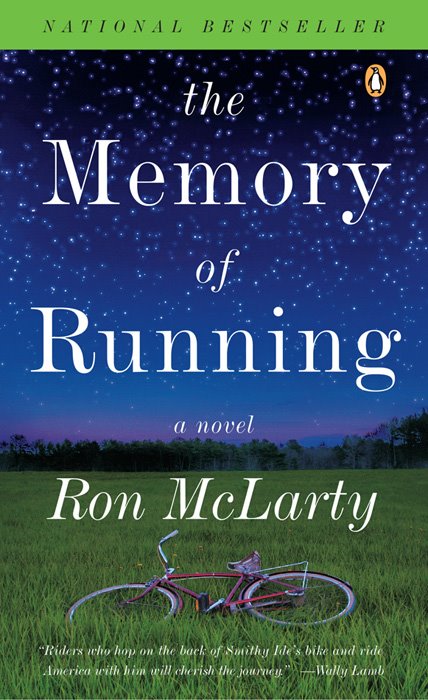
The Memory of Running by Ron McLarty


August 7, 2006 -- The Memory of Running by Ron McLarty
Location: Blue Moose at 6:30
Sometimes there are moments when a person has to make a decision, as opposed to just letting things just happen. A person then has to happen himself. I have never done this. Life bounced off me, and bounced me, and now it was going to bounce me to death.—from The Memory of Running (p. 77)

Meet Smithson "Smithy" Ide, an overweight, friendless, chain-smoking, forty-three-year-old drunk who works as a quality control inspector at a toy-action-figure factory in Rhode Island. By all accounts, especially Smithy's own, he's a loser. Then, within one week, Smithy's beloved parents are killed in a car crash, and Smithy learns that his emotionally troubled, long-lost sister, Bethany, has turned up in a morgue in Los Angeles. Unmoored by the loss of his entire family-Smithy had always hoped Bethany might return-he rolls down the driveway of his parents' house on his old Raleigh bicycle into an epic journey that will take him clear across the country. (read more here)

Moving between past and present in alternating chapters, Smithy's story is so gripping several of our group found themselves skipping ahead to read how one strand turned out before they were willing to move back to the present in the next chapter. Marci pointed out the great "cliff-hangers" that inspired her to do that....
"Sal thought he heard a muffled scream from inside the car; then it turned into the high reeds and disappeared." (chap. 14)
"That's when Carl Greenleaf's pick up truck hit me from behind." (chap. 29)
"...and the fat-faced redheaded guy shot me." (chap.47)

Pam noticed the metaphor of legs in the story. I guess it makes sense because Smithy was a "running man" though he doesn't really run again until the very end. He often feels his fears or inadequacies first in his legs. The title of the book shows up when their dog gets fixed. "He'll have the memory of running. Then he'll forget about girl dogs and be fat and happy." --Bethany"You thought my legs is all there is." --Norma"I don't have legs enough for my family." -- Smithy

We found ourselves trying to decide if Norma, the neighbor confined to her wheelchair who'd been nursing a 40 year crush on Smithy, was believable.... But we all believed Bethany--the "voice" and her poses. We hated Glen Golden (the golfing psychiatrist) and Georgiana Glass and decided this book didn't paint a very good picture of the medical profession and what's with all the "G's?" This story made us think about humanity... the different people Smithy meets, the way he is treated, the conclusions we jump to...

This was a pleasant book.... despite the sadness and the struggle, it wasn't maudlin. We were all glad to have read it. Thanks for the recommendation Larry.

Thursday, July 06, 2006

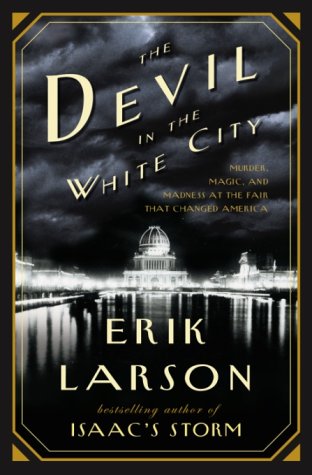
The Devil in the White City by Erik Larson


July 6, 2006 -- The Devil in the White City: Murder, Magic, and Madness at the Fair that Changed America by Erik Larson (nonfiction)
Meeting Location: Suite 49 at 6:30
Here's the Random House link for the book.

taken from Amazon.com
Author Erik Larson imbues the incredible events surrounding the 1893 Chicago World's Fair with such drama that readers may find themselves checking the book's categorization to be sure that The Devil in the White City is not, in fact, a highly imaginative novel. Larson tells the stories of two men: Daniel H. Burnham, the architect responsible for the fair's construction, and H.H. Holmes, a serial killer masquerading as a charming doctor. Burnham's challenge was immense. In a short period of time, he was forced to overcome the death of his partner and numerous other obstacles to construct the famous "White City" around which the fair was built. His efforts to complete the project, and the fair's incredible success, are skillfully related along with entertaining appearances by such notables as Buffalo Bill Cody, Susan B. Anthony, and Thomas Edison. The activities of the sinister Dr. Holmes, who is believed to be responsible for scores of murders around the time of the fair, are equally remarkable. He devised and erected the World's Fair Hotel, complete with crematorium and gas chamber, near the fairgrounds and used the event as well as his own charismatic personality to lure victims. Combining the stories of an architect and a killer in one book, mostly in alternating chapters, seems like an odd choice but it works. The magical appeal and horrifying dark side of 19th-century Chicago are both revealed through Larson's skillful writing. --John Moe

*********

Judy, Marci, Larry, Pam and I met on the patio for drinks, dinner, and dessert.... and of course to discuss the book. I was pleasantly surprised with this historical work and that view was shared by most. Initially the book was recommended to Larry by a student, and I actually purchased this a few months ago for my father, not even realizing it was nonfiction.

We all agreed that this book is like "a spoonful of sugar" when it comes to learning about history, not that we are opposed to that either. But as Judy said, the book asked "little of us as readers" and was a pleasant read. I would guess that many students would enjoy this glimpse into our history. I had never realized how this one event--The Chicago World's Fair of 1893-- did so much to shape our world... From Cracker Jacks to the Ferris Wheel, from Buffalo Bill to Frank Lloyd Wright, so many new ideas, products, people were introduced or cited within the pages of this book which focuses on a fairly narrow slice of history.

Marci shared excerpts from Failure is Impossible, a book about Susan B. Anthony, that included the speech she gave (alluded to in our book) rejecting the idea of closing public places on the sabbath,

"It seems to me the common sense thing that all public places of art, science and learning should be open to suit the convenience of all classes of people; the ten hours of each week-day for such as have leisure, the evenings and Sundays for those whose bread-winning employments occupy every one of those ten hours of each of the six week-days."

I was particularly struck by the suggestion that Walt Disney's father who worked on creating the "White City" would later tell stories about it to his sons, possibly planting an idea for what would come to be Disneyland.

We discussed the idea of the two stories.... how they ran side by side and yet never converged and what we though about that aspect of the narrative. Larry reiterated his distaste for stories that jump from one perspective to another and I guess this is the second book we've read this summer to do that. I am not nearly so troubled by that sort of thing and I actually thought the storyline of Holmes, the serial killer, provided an element that broke up some of the dense detail of the city and its construction.

Pam created a list of dynamite questions suitable for book club trivia or perhaps to be used at our trivia group on Saturday nights. This book is oozing with little known facts that appeal to to folks like us. It was noted that the beginning and the ending of the book with the sea voyage of Burnham on the Olympic was a clever way to bookend the story.

This is one we'd recommend.

Saturday, June 03, 2006

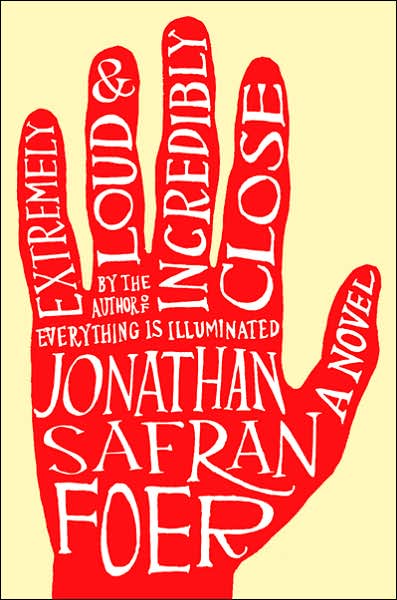
Extremely Loud and Incredibly Close


May-June 2006 -- Extremely Loud and Incredibly Close by Jonathan Safran Foer (fiction)
Meeting Location: Capones

We were scheduled to meet at the end of May but with the end of school year and all, people were having a hard time finishing the book. Since I'd read it in February it wasn't so bad for me, but I did want to reread it and I hadn't done that yet either. So we rescheduled on June 3rd at Capone's for a Saturday lunch. Larry, Judy, Pam and I were there to discuss and it seemed that the general agreement was this book deserves a thumbs up. Not sure about the rest, but I intend to read Everything is Illuminated, Safran Foer's other book that was recently made into a movie.

One aspect of this book that I found delightful was the visual layout of the pages... there were photographs and unusual things done with the typography. One thing I liked but others found somewhat distracting was the dual stories that were happening in periodic alternating chapters in which we hear the voices of Oskar's grandmother and that of his grandfather. I actually liked those bits quite a lot and felt that they added depth to his story.


FROM THE PUBLISHER

Oskar Schell is an inventor, Francophile, tambourine player, Shakespearean actor, jeweler, pacifist. He is nine years old. And he is on an urgent, secret search through the five boroughs of New York to find the lock that fits a mysterious key belonging to his father, who died in the attacks on the World Trade Center.An inspired creation, Oskar is endearing, exasperating, and unforgettable. His search for the lock careens from Central Park to Coney Island to the Bronx and beyond. But it also travels into history, to Dresden and Hiroshima, where horrific bombings once shattered other lives. Along the way, Oskar encounters a motley assortment of humanity—a 103-year-old war reporter, a tour guide who never leaves the Empire State Building, lovers enraptured or scorned—all survivors in their own ways. Ultimately, Oskar ends his journey where it began, at his father's grave. But now he is accompanied by the silent stranger who has been renting the spare room of his grandmother's apartment. They are there to dig up his father's empty coffin.

Wednesday, April 19, 2006

Our Spring Catch Up Session

April 2006 -- Spring Catch-Up Session
Meeting Location: Hilton Garden Inn


This time around Larry, Pam and I met at The Hilton Garden Inn. We enjoyed a meal and discussed the books we completed for that month. The object was to go back into the recent book club past and find a title we'd not completed, read it and spend time discussing those books further.


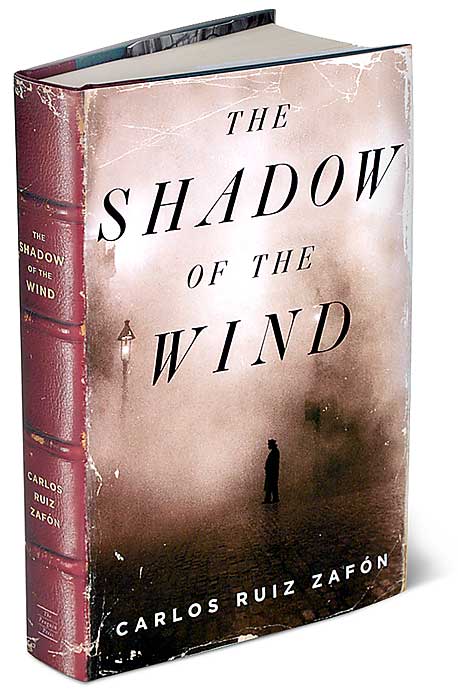
Larry read Shadow of the Wind (La Sombra Del Viento) by Carlos Ruiz Zafron. He also read Anna Karenina by Leo Tolstoy and Shakespeare: A Biography by Peter Ackroyd

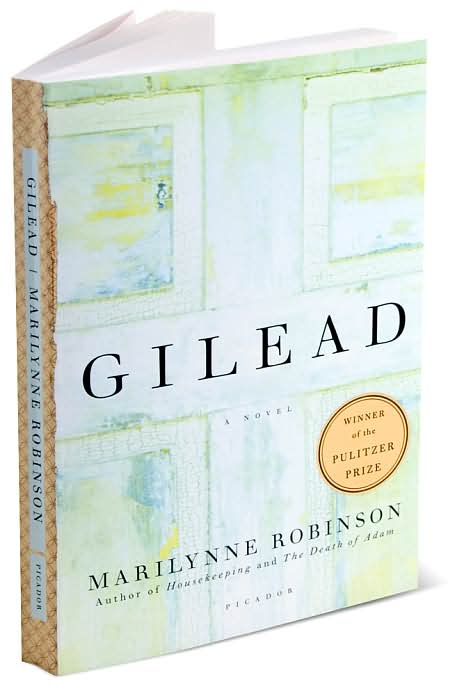
Pam read Gilead by Marilynne Robinson and some British murder mysteries.

Carmyn tried to read Gilead by Marilynne Robinson.... it's just not happening (Larry said not to be too hard on myself but that the book might appeal to an older person.... Hmmmm)
Instead she read The Prime of Miss Jean Brodie and The Public Image by Muriel Spark and The Mermaid Chair by Sue Monk Kidd.

Sunday, March 19, 2006

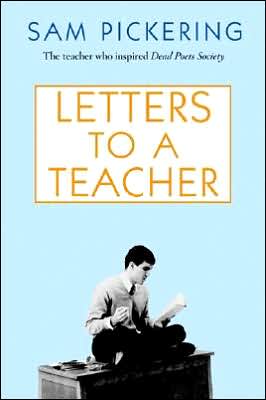
Letters to a Teacher by Sam Pickering


March 2006 -- Letters to a Teacher by Sam Pickering (nonfiction)
Writer's Conference Author
Meeting Location: Suite 49 & Hilton Garden Inn

Each year one author at the UND Writer's Conference agrees to meet with our RRVWP participants and our book club members usually try to get involved and make that our book for the month of February or March. This year our author was Sam Pickering and we met at Suite 49 in their back room to discuss. The food was good and the conversation too, unfortunately the good conversation happened around Mr. Pickering rather than as stimulated by his presence... there may have been too many people or perhaps we shouldn't have tried to EAT and discuss... a coffee shop or the fireside room at Christus Rex might have been better suited for our purposes. Nevertheless Mr. Pickering echoed back many of his remarks from his book and the following night he entertained the crowd at the Empire Theatre as he offered more of his remarks on teaching and life.

Having recently read Teacher Man by Frank McCourt didn't help this reading situation. In some ways, I felt both books were a bit similar and neither were quite what I had in mind. For the month of March we did meet once BEFORE to discuss this title at the Hilton Garden Inn and Judy, Kristi, Larry, Pam and I were able to prepare for our meeting and discuss the book fully and prepare to meet the author.

Sunday, February 05, 2006

1421 The Year China Discovered America by Gavin Menzies


February 2006 -- 1421 The Year China Discovered America by Gavin Menzies
Meeting Location: Judy's House

This nonfiction selection was one of many suggested at the previous meeting and Larry even had a DVD which he brought to our discussion. Following the meeting, Judy, Pam and I all watched it. I found this book fascinating but I never did finish it. Judy found it to be almost too much like a "research paper" and yet the concept was very intriguing... Pam read a different book by mistake. :)

Our discussion was at Judy's and this month was a small group... Larry, Judy and I. But we had DELICIOUS food following the Chinese theme.. I brought some takeout (not very creative, I'll admit) Judy made hot and sour soup and Larry brought Tsingtao beer. I can't remember much of the discussion... but I haven't forgotten that soup. Yum.