 Our featured author of the UND Writer's Conference was Junot Diaz.
Some chose to read his novel The Brief Wondrous Life of Oscar Wao and others read his short story collection Drown. We had the opportunity to meet with Diaz at The Toasted Frog.

 Our featured author of the UND Writer's Conference was Junot Diaz.


 For September we read Water for Elephants by Sara Gruen.


 Kristine's Mexican Flag Veggies
 Larry's Dos Equis Beer and Pam's Flautas
 Mexican candy to add even more authenticity.


We each picked a book club book we'd not managed to finish during the past year and we tried to complete it for this meeting. For folks like Larry, who've completed every book, he simply needed to find a book he's been dying to read and go for it!
Here's what we've read this year:
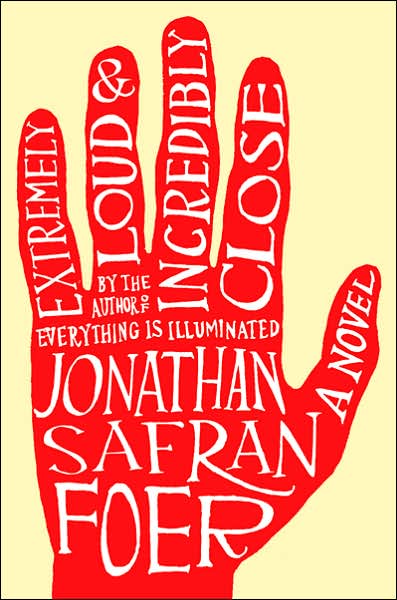
Extremely Loud and Incredibly Close by Jonathan Safran Foer
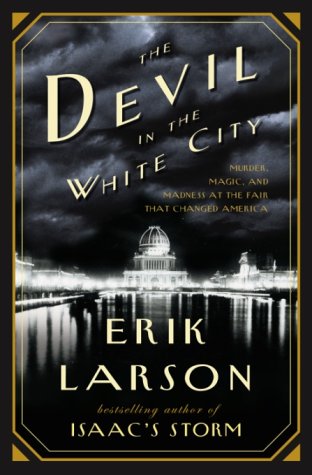
Devil in the White City by Erik Larson
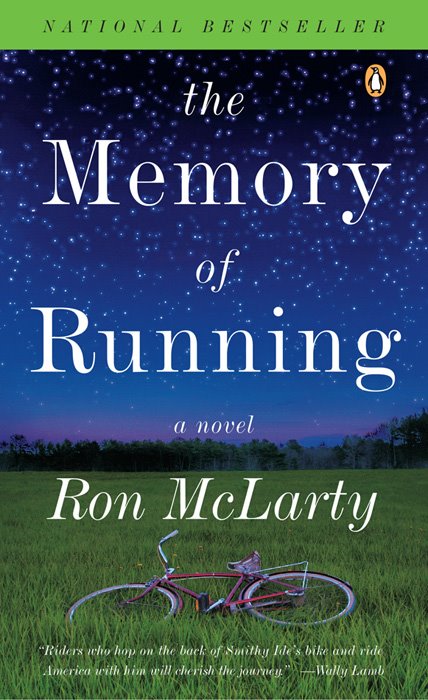
The Memory of Running by Ron McLarty
For September we each read an adolescent lit book
Wicked by Gregory Maguire
The Glass Castle by Jeannette Walls
Then we did a book swap for our January meeting
For Feb, we read Assassination Vacation by Sarah Vowell
For March, our UND Writers Conference author, Stuart Dybek's book of short stories -- Childhood and other Neighborhoods.
For April, The Memory Keeper's Daughter by Kim Edwards
We also set the books for the next three months:
For June--
Saving Fish From Drowning by Amy Tan
For July--
Caramelo by Sandra Cisneros
For August--
Sophie's World by Jostein Gaardner


 February 20, 2007 Assassination Vacation by Sarah Vowell
 Kristine finished two books over break: Animal Farm by George Orwell and The Island by Gary Paulsen. However she is still reading Tomcat in Love by Tim O'Brien as recommended by Larry for her Dec. book exchange book. She found that she was unable to empathize with the narrator and liked the bits with Viet Nam best. He is a bit of a scoundrel and she is hoping that the book will resolve itself by the ending (Larry assures us it will, though he points out that our "Tomcat" becomes less likeable as the story goes on). Ultimately Kristine is determined to find out if Lorna Sue (Tom's ex-wife) is, in fact, involved in an incestuous relationship with her brother... Hmmmm......
 Larry is reading Patty Jane's House of Curl by Lorna Lardvick as recommended by Pam. It's Lardvick's first novel and it focuses on two sisters in Minnesota who have faced hardship and loss and bond to form a collective strength and a hair salon. In some ways it compares to Fannie Flagg's Fried Green Tomatoes in spirit and to Steel Magnolias with its fellowship of women gathered in a hair salon. Larry read part one and had to put the book down to deal with the almost predictable plot-driven tragedies... "It was almost melodramatic--it grosses me out!" were the words he used. However part two is where the salon comes in and the women begin to rebuild their lives. Larry's connection to the story can be found in his own memories of his mother's hair salon that was part of his childhood home... smelling of permanent waves and housing a Coke machine full of those curvy cold Coke bottles.
 Marci read about 1/3 of The Feast of Love by Charles Baxter as recommended by Judy. So far she likes it but doesn't "love it." The thing she DID enjoy was the different perspectives on the various love stories. Feast of Love is a book about writing a book and that was somewhat annoying to Judy when she first read it, but later it all gets even more connected and that makes it better. She was glad she read it and Marci is eager to finish it as well. Marci thought she might still try to read Picture Bride by Yoshika Uchida as recommended by Judy.
 Carmyn read W;t by Margaret Edson as recommended by Kristine. This play is typical in its brevity but powerful in its message. I really enjoyed it and am thinking about buying a copy for myself. I had once seen a few minutes of the film version of the play starring Emma Thompson and oddly enough the bit I'd seen ended up being one of my favorite bits. The one thing I regretted is that I didn't know as much about John Donne as I ought. I felt that this book was one that explored the ideas of life and death and illness and regret, but it also emphasized the power of literature. Now, I'm afraid I'll need to start to study Donne's poetry. I also started the The Dirty Girls Social Club by Alisa Valdez-Rodriguez as recommended by Pam but am only about 1/3 of the way through the book. I was just consumed by reading a biography of Woody Guthrie over break and that left far too little time for other reads. I still plan to at least "taste" The Know-It-All by A.J. Jacobs as recommended by Kristine.
 Judy read The Painted Drum by Louise Erdrich as recommended by Larry. This book is different from the typical Erdrich in that it is initially set in New Hampshire. The story begins with some nominally Native American folk who live there and it connects to North Dakota with the drum which one of the main characters steals from an estate sale in order to return it to its home in North Dakota... a sort of spiritual quest. Since Judy LOVES Erdrich books she wasn't disappointed and though it didn't take the place of her favorite (Tracks) it was a pleasure to read Erdrich's latest.
 Pam read The Chill by Ross MacDonald as recommended by Carmyn and she really appreciated the older style of mystery: the sort that gets solved not by CSI teams or forensic squads but by interviews, questioning and old fashioned putting two and two together. Her other book was The Passion of Artemisia by Susan Vreeland as recommended by Marci.
 November 30, 2006 The Glass Castle by Jeannette Walls
 October 30, 2006 Wicked: The Life and Times of the Wicked Witch of the West by Gregory Maguire
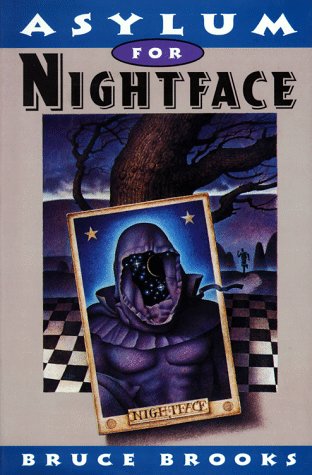 Judy read Asylum for Nightface by Bruce Brooks


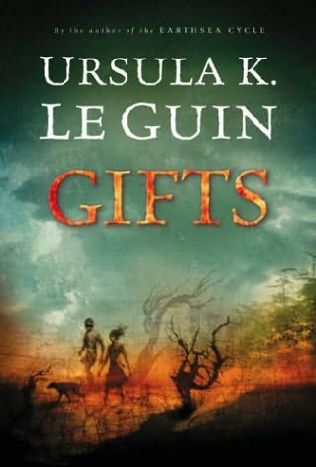

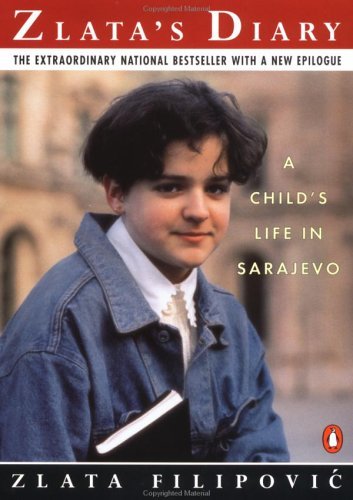
 From the Publisher
"Half of our family, the better-looking half, is missing," Nomi Nickel tells us at the beginning of A Complicated Kindness. Left alone with her sad, peculiar father, her days are spent piecing together why her mother and sister have disappeared and contemplating her inevitable career at Happy Family Farms, a chicken slaughterhouse on the outskirts of East Village. Not the East Village in New York City where Nomi would prefer to live, but an oppressive town founded by Mennonites on the cold, flat plains of Manitoba, Canada.
This darkly funny novel is the world according to the unforgettable Nomi, a bewildered and wry sixteen-year-old trapped in a town governed by fundamentalist religion and in the shattered remains of a family it destroyed. In Nomi's droll, refreshing voice, we're told the story of an eccentric, loving family that falls apart as each member lands on a collision course with the only community any of them have ever known. A work of fierce humor and tragedy by a writer who has taken the American market by storm, this searing, tender, comic testament to family love will break your heart."
Both Pam and Judy read this one and part of the attraction was the regional nature of the story. Pam compared it to a different memoir she'd just read The Glass Castle by Jeanette Walls and explained why the Walls book was such a superior book, despite the fact that one was fiction and the other a memoir. For her the construction of Castle gave the reader a better sense of WHERE the story was headed and she felt that was something A Complicated Kindness lacked. Direction and Conclusion. It just sort of fizzled out. Still, it sounds like it was interesting.

 Peter Ackroyd

This nonfiction selection was one of many suggested at the previous meeting and Larry even had a DVD which he brought to our discussion. Following the meeting, Judy, Pam and I all watched it. I found this book fascinating but I never did finish it. Judy found it to be almost too much like a "research paper" and yet the concept was very intriguing... Pam read a different book by mistake. :)
Our discussion was at Judy's and this month was a small group... Larry, Judy and I. But we had DELICIOUS food following the Chinese theme.. I brought some takeout (not very creative, I'll admit) Judy made hot and sour soup and Larry brought Tsingtao beer. I can't remember much of the discussion... but I haven't forgotten that soup. Yum.


Taken from the Amazon site:
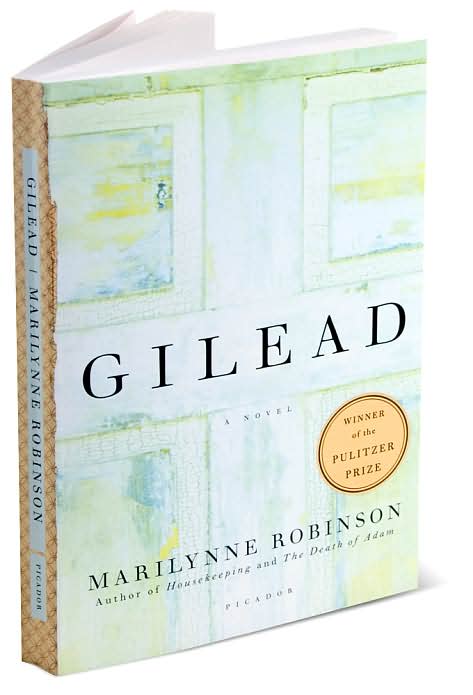
The narrator, John Ames, is 76, a preacher who has lived almost all of his life in Gilead, Iowa. He is writing a letter to his almost seven-year-old son, the blessing of his second marriage. It is a summing-up, an apologia, a consideration of his life. Robinson takes the story away from being simply the reminiscences of one man and moves it into the realm of a meditation on fathers and children, particularly sons, on faith, and on the imperfectability of man.
The reason for the letter is Ames's failing health. He wants to leave an account of himself for this son who will never really know him. His greatest regret is that he hasn't much to leave them, in worldly terms. "Your mother told you I'm writing your begats, and you seemed very pleased with the idea. Well, then. What should I record for you?" In the course of the narrative, John Ames records himself, inside and out, in a meditative style. Robinson's prose asks the reader to slow down to the pace of an old man in Gilead, Iowa, in 1956. Ames writes of his father and grandfather, estranged over his grandfather's departure for Kansas to march for abolition and his father's lifelong pacifism. The tension between them, their love for each other and their inability to bridge the chasm of their beliefs is a constant source of rumination for John Ames. Fathers and sons.
The other constant in the book is Ames's friendship since childhood with "old Boughton," a Presbyterian minister. Boughton, father of many children, favors his son, named John Ames Boughton, above all others. Ames must constantly monitor his tendency to be envious of Boughton's bounteous family; his first wife died in childbirth and the baby died almost immediately after her. Jack Boughton is a ne'er-do-well, Ames knows it and strives to love him as he knows he should. Jack arrives in Gilead after a long absence, full of charm and mischief, causing Ames to wonder what influence he might have on Ames's young wife and son when Ames dies.
These are the things that Ames tells his son about: his ancestors, the nature of love and friendship, the part that faith and prayer play in every life and an awareness of one's own culpability. There is also reconciliation without resignation, self-awareness without deprecation, abundant good humor, philosophical queries--Jack asks, "'Do you ever wonder why American Christianity seems to wait for the real thinking to be done elsewhere?'"--and an ongoing sense of childlike wonder at the beauty and variety of God's world.
In Marilynne Robinson's hands, there is a balm in Gilead, as the old spiritual tells us. --Valerie Ryan


